FAQ
Curious about how we’re transforming school meals across Europe? Here, you’ll find answers to the most common questions about our mission, impact, and goals. This page will be updated periodically to keep you informed as the project evolves. Explore below to learn more!
About the SchoolFood4Change Project
SchoolFood4Change (SF4C) aims to promote a broad societal shift toward healthy, sustainable diets by transforming school meals and the food culture at school. SchoolFood4Change has already directly reached over 3,800 schools and more than one million children worldwide through its outstanding and innovative Triple Approach. Working closely with municipalities, regions, schools, and local food actors across Europe, SchoolFood4Change offers a replicable model that cities and policymakers can adopt to improve public health, support food systems resilience, and drive systemic change with schools as catalysts. Beyond nutrition, SchoolFood4Change integrates food education and participatory activities through the Whole School Food Approach, empowering children to make informed food choices, connect with local food cultures, and understand environmental sustainability. In essence, SchoolFood4Change is about making school meals tasty, enjoyable, educational and healthy for both our children and the planet.
In SchoolFood4Change we have developed and employed a holistic and adaptable methodology called “the SchoolFood4Change Triple Approach”. It addresses systemic issues – or gaps – in food systems from three angles of health and nutrition, social equity, economies, skills and communities:
1. Innovative Sustainable Food Procurement: Changing the way food and ingredients for school meals are sourced by local and regional governments and school organisations towards more sustainable practices. >> Find the Practical Handbook for Innovative and Sustainable Public Procurement of Healthy School Meals here.
2. Planetary Health Diets & Cooking: Training and empowering school cooks and kitchen teams to prepare healthy, sustainable meals and to pass on their knowledge about the positive effects of the changes. >> Explore the School Menu Design Handbook here.
3. Whole School Food Approach (WSFA): Creating a healthy food culture in and around schools. This holistic concept integrates food and education into daily school life, involving the wider school community including caregivers, farmers, businesses, and civil society. >> Open the Magazine with Inspiring Good Practices and a Quick Dive into the Whole School Food Approach here.
Environmental Sustainability
Public procurement forms one of the three pillars of the SchoolFood4Change Triple Approach. Through this strand of work, SchoolFood4Change has supported cities in designing more sustainable tenders for their school canteen suppliers — introducing new criteria for required products and services to drive meaningful, lasting change. SchoolFood4Change partners and cities organised local market dialogues to facilitate collaboration between the local/regional government, schools and a network of suppliers. Additionally, SchoolFood4Change developed technical guidance on innovative procurement criteria and models to support design and work with ambitious tenders and contracts. These can be to purchase school food directly (if on-site kitchens are available) or school catering services. Linking a city’s purchasing power to its health and sustainability goals can achieve big impacts!
Local and regional governments (cities, towns, regions) play a central role in SchoolFood4Change. They are responsible for defining public procurement criteria and designing tenders for school catering services. As part of SchoolFood4Change, cities across Europe have worked closely together to strengthen procurement standards, integrating health, sustainability, and social criteria into new and upcoming tenders. SchoolFood4Change collaborates with 35 cities, ensuring that our strategy and Triple Approach are applied to deliver healthier, fresher and more sustainable school meals. At the national level, SchoolFood4Change engaged in 12 national policy dialogues with national ministries, contributing evidence and good practices to discussions on school feeding policies and programmes with the aim to expand the coverage, quality, and ambition of school food programmes, and embed long-term improvements into public policy. >> Find the SchoolFood4Change recommendations for policymakers here.
Today’s food systems account for approximately one third of global greenhouse gas (GHG) emissions, highlighting the urgent need for change. SchoolFood4Change addresses this by promoting plant-rich diets, conscious consumption, and local, short supply chains in school food procurement — aiming to reduce food waste, and achieve a 25% reduction in emissions from school food procurement.By prioritising organic agriculture — with a target of sourcing at least 40% of food and drink from certified organic sources — SchoolFood4Change reduces pressure on biodiversity. In parallel, by teaching children to cook, grow food, and understand where it comes from, the project equips future generations with the knowledge and skills to make informed, environmentally responsible food choices. The project has also developed a tool to evaluate the environmental impact of school menus across Europe, helping city procurers make more informed and sustainable food sourcing decisions for schools and their canteens.
food education and the whole school food approach
SchoolFood4Change integrates food education into school curricula and school routine through the Whole School Food Approach. The aim is to motivate teachers and actively engage students in hands-on activities such as growing food, cooking, and learning about sustainable food systems. Through exciting and memorable initiatives for children, such as Farm-to-School Twinning programmes, cooking classes, and food-focused Canteen Day Parties, SchoolFood4Change creates a long-term, child-friendly school food environment and culture that promotes long-term healthy eating habits and conscious food choices. Teachers, the school administration and staff play a key role not only in delivering knowledge but also in empowering students to participate and take ownership, fostering engagement and shared responsibility in building a sustainable food culture within schools. >> Learn how to organise a Canteen Day Party here.
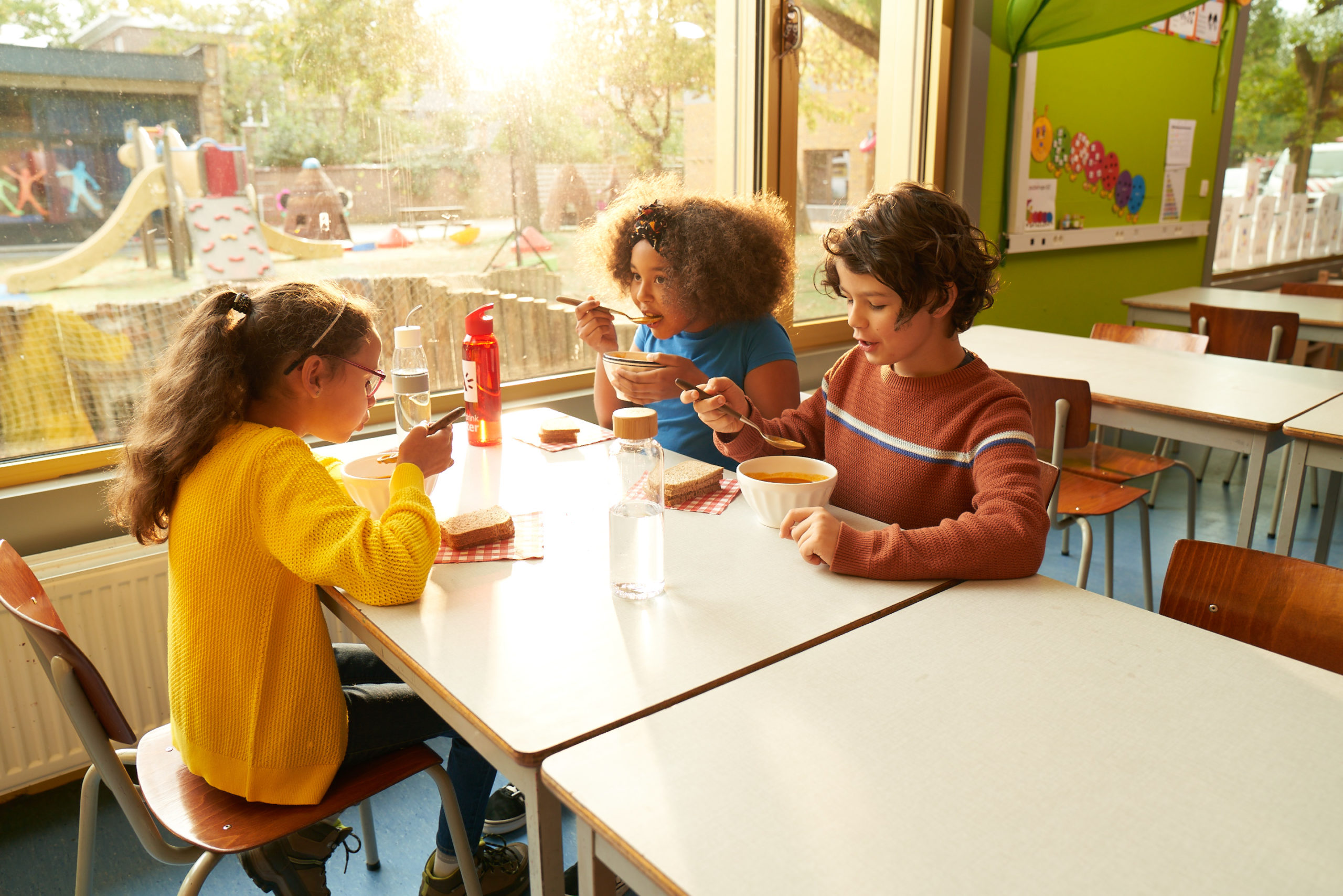
SchoolFood4Change combines healthy, sustainable school meals with comprehensive food education. Children are exposed to diverse, locally sourced, and climate-friendly meals that are appealing, tasty, and culturally relevant, helping them develop a positive relationship with food. Across cities and countries, SchoolFood4Change has implemented participatory activities—such as involving students and the school staff in menu planning, tasting sessions, food related activities and farm visits. Through these activities, children gain the knowledge and confidence to make informed choices, fostering curiosity about different flavours and cuisines.
school canteens and chef training
School canteens under SchoolFood4Change now serve meals that are healthy, climate-friendly, innovative, and linked to local food identities. Thanks to innovative procurement practices, cities redesigned their school food tenders and geared them towards seven procurement targets developed by SchoolFood4Change. Additionally, 1,400 school cooks have been trained in innovative and sustainable cooking practices, such as Planetary Health Diets, to create tasty, fresh and healthy recipes cooked from scratch.
Building on the expertise of the University of Gastronomic Sciences the SchoolFood4Change team developed 44 new recipes and menus that are appealing to children, reduce food waste, and promote healthy eating habits. Recipes were designed through a participatory collaboration process with cooks and trainers from different cities, who were trained through online courses and in-person sessions so that they can pass on their knowledge locally. The recipes can be adapted to different countries, seasons, and ingredient availability, providing an innovative way to design, communicate, and implement meals that are nutritious, culturally relevant, and environmentally sustainable.
Cooks and kitchen teams play a crucial role in implementing the Whole School Food Approach (WSFA). They plan menus and prepare meals that are nutritious, appealing, and tasty.
In the framework of SchoolFood4Change, cooks and kitchen teams were involved in online and in person training courses to improve their cooking skills and deliver healthy, tasty and fresh meals. Through a participatory collaboration between cooks and trainers, 44 new recipes and menus were developed — carefully crafted to appeal to children’s tastes, minimise food waste, and encourage healthy eating habits. Cooks and canteen staff serve as role models for children. They help to make the school canteen a place where children and young people enjoy spending time. The canteen becomes a place for educational activities to teach students about healthy eating and sustainable food practices.
societal impact
Children are among the most vulnerable groups in Europe. Approximately 20 million children in EU countries are at risk of poverty or social exclusion, nearly 1 in 10 people cannot afford a proper meal, and around 1 in 3 children are overweight or living with obesity. SchoolFood4Change tackles these inequalities through the provision of healthier meals in its partner schools and by calling on policymakers to guarantee the provision of nutritious school meals for all children. SchoolFood4Change published a Policy Brief with recommendations to tackle inequality through healthy and sustainable school food and launched a petition with WeMove Europe for free healthy school meals for every child in Europe, gathering over 111,000 signatures.
SchoolFood4Change defined seven objectives to be pursued within the framework of school food procurement in order to strengthen food system resilience: promoting organic production and protecting biodiversity; ensuring nutrition, quality, taste, freshness and seasonality; reducing greenhouse gas emissions; tackling food poverty and inequality; fostering food education, food culture and culinary traditions; supporting small farmers and enabling the social integration of disadvantaged and vulnerable groups; and advancing fair trade and decent labour conditions. Sustainable public food procurement measures not only support local economies, but help bridge the urban-rural divide, and reduce a city’s environmental impact. Public procurement is a powerful lever: Each year, over 250,000 public authorities in the EU spend about 14% of GDP on goods and services.
Beyond procurement, SchoolFood4Change builds knowledge through food education, fostering life skills and healthy, sustainable eating habits, starting with young generations. SF4C partner schools have established twinning programs with farms, connecting children directly to food producers and the origin of food. SchoolFood4Change developed a policy brief on “Strengthening food security via food production environments in and around cities” linking its actions to climate resilience, health outcomes, and territorial development.
The SchoolFood4Change project improved public health by ensuring that 15% of the partnered schools started to provide free, healthy breakfasts and snacks to support disadvantaged children while promoting universal school meals. SchoolFood4Change collaborated with and trained 29 cook trainers, enabling them to pass on knowledge to their kitchen teams in our partner schools, ensuring that the schools will offer nutritious and healthy food, helping to reverse rising childhood obesity rates.
Under the leadership of the University of Alcalá and BC3, SchoolFood4Change also conducted scientific Health Impact Assessments in Vienna, Madrid, Milan, and Dordogne to measure the interventions’ effectiveness on children’s health between 2022 and 2025 and to contribute to the robustness of scientific evidence in this field. By making food procurement more sustainable, providing scientific insights, training cooks and kitchen teams, developing healthy and nutritious recipes, changing everyday school life and integrating food education more strongly, SchoolFood4Change is creating sustainable change that has an impact on public health through the diversity of measures at various levels.
The long-term benefits of SF4C include improved public health and environmental protection, stronger regional food systems, and enhanced food education. By prioritising children’s nutrition, the project tackles child obesity and malnutrition and aims to give every child access to at least one healthy school meal per day. The SchoolFood4Change Triple Approach goes beyond nutrition, promoting social inclusion and equity and positioning cities and schools at the frontline against child poverty and inequality. SF4C integrates food education into school programmes in recognition of its importance for a healthy society, fostering sustainable food cultures that connect children to farmers, soils, and local communities. Finally, SchoolFood4Change’s multistakeholder approach — bringing together cooks and kitchen teams, cities and procurers, small-scale farmers, teachers, children and the wider school community — builds shared ownership across the entire food system. This participatory model strengthens trust, shortens supply chains, and creates the conditions for a resilient, community-rooted food culture that can endure well beyond the project itself, serving children, families, schools and small agro-businesses alike.
Join us in celebrating our achievements!
The best way to support us is by sharing and using our knowledge, learnings, and materials. You’ll find what you’re looking for here!