PROOF OF CONCEPT
Impact on policy through scientific insights and practice-based experience
Beverage List – Refreshing Scientific Insights & Policy Asks
How the development of evidence through scientific studies, impact assessment and the implementation of good practices can influence policy.
Drinks
This beverage list is a guide to the scientific studies that have been carried out and the initiatives that have been taken to influence policy. What is your favourite drink?
Who can implement or Influence?











Meet your sustainability goals
 School meals are more climate friendly
 School meals support sustainable food production
 School meals are tastier, more nutritious and in season
 School meals strengthen small farmers and vulnerable groups
 School meals reduce food poverty and inequality
 School meals are part of food education

Aperitif
Describing the approach
As a research and innovation funded project our aim is to find out what approaches and activities will be the most effective ways to change the school meal systems in Europe. New tools and innovative ways of working have been developed, tested and evaluated by partners. The lessons learned have led to reworking of the tools – a truly iterative process.
The new knowledge acquired in in the project has resulted in scientific articles and policy recommendations on local, national and international levels.
Jump directly to Policy Infusions

Sparkling scientific insights
Researchers and practitioners review the project
Cross cutting studies
Whole School Food Approach
Planetary health diets and cooking
Policy Infusions
A rich blend of strategies and legislative flavours that infuse school food systems with lasting change
Fact sheets
Driving change through national policy dialogues & stakeholder mapping
Does your organisation want to gather national stakeholders to influence policy?
In this fact sheet you can get inspiration on how.
How to do Effective Advocacy for Healthy, Sustainable School Food at EU level
Get a quick overview of the important steps to reach effective advocacy for healthy, sustainable school food at EU level.
The policy briefs
Tackling inequality through healthy and sustainable school food.
The focus for this policy brief is three:
1. Support EU member states in the provision of…
at least one healthy and sustainable school meal daily, accessible to all children (0 – 18 years), aligning with the EU San Sebastian Declaration on School Meals and drawing from the principles of the EU Child Guarantee.
2. Provide an enabling framework for…
the implementation of a Whole School Food Approach (WSFA) in all schools across Europe.
3. Enhance the integration and alignment of…
international conventions and EU policies affecting school food, the right to healthy sustainable food and food education, and thereby fostering collaboration and coherence for a common approach.
Target groups: Policy makers (EU); civil society organisations
1. Planning for food environments that are healthy, sustainable, and attractive.
2. Stimulation of sustainable food production and consumption.
3. Work with Food Policy Councils (FPCs) to establish multi-level governance and collaboration
Target groups: Policy makers (local & national); civil society organisations; city administrators/procurers; catering services/business; educators/principals/staff
School food procurement as a lever for economic resilience, environmental sustainability, and public health
Key messages from SF4C are:
1. The future of procurement policy lies in…
reinforcing public procurement’s role as a lever for economic resilience, environmental sustainability, and public health.
2. Transition from voluntary sustainability criteria to…
legally binding ones, ensuring that the public food procurement budget aligns with the public interest.
3. Support market engagement, innovative…
procurement practices and invest in monitoring and evaluating procurement processes.
4. Scale up proven and effective (local) models, where…
successful experiences demonstrate that systemic change is possible through strategic procurement, supplier engagement, and the right regulatory frameworks at the local and EU levels. These models should be rolled out further and transformed into structural policies.
Target groups: Policy makers (EU, local & national); city administrators/procurers; caterinng services/business
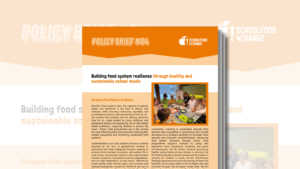
Strengthening food security via food production environments
Building food system resilience through healthy and sustainable school meals
Recommendations for a European framework enabling healthy school meals for public health and food system resilience:
1. Strengthen EU governance for school meals
2. Mainstream the triple approach for resilient school food systems.
3. Prioritise strategic investment in resilient school meal systems
Target groups: Policy makers (EU); civil society organisations
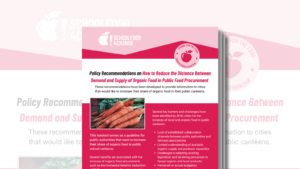
Policy Recommendations on How to Reduce the Distance Between Demand and Supply of Organic Food in Public Food Procurement
SF4C recommendations for strategic public procurement
policy frameworks are:
1. Setting ambitious targets…
formalising targets for organic food procurement (e.g., 40% organic by mass/volume/value) and sourcing from small farmers.
2.Tailored tendering…
designing tenders that explicitly integrate criteria for organic and fresh seasonal foods, including social and environmental aspects.
3. Contract lotting…
policy requiring the division of contracts into smaller lots to encourage participation from SMEs and local producers.
4. Transparency...
mandating the publication of forward procurement plans to allow suppliers to prepare
5. Market dialogue…
Engage with the market ahead of issuing a new tender to get a better understanding of the supply side, in this case, the market readiness to deliver higher shares of organic.
Target groups: Policy makers (local & national);city administrators/procurers; caterinng services/business
School meals as a policy area with huge potential
SchoolFood4Change calls for the prioritisation of three interconnected and decisive action areas when reviewing and developing the European Green Deal legislation and any upcoming policy processes relating to sustainable food systems:
1. Implement and standardise food education.
2. Enable schools to provide sustainable food and food environments for the well-being of people and our planet.
3. Use the power of sustainable public food procurement.
Target groups: Policy makers (EU, local & national); city administrators/procurers; catering services/business
Evidence on Tap
The key performance indicators and results crosscutting the approaches
Evidence on tap
Find out what partners have done to achieve SF4C’s sustainability goals.
Together we have a big impact!
