
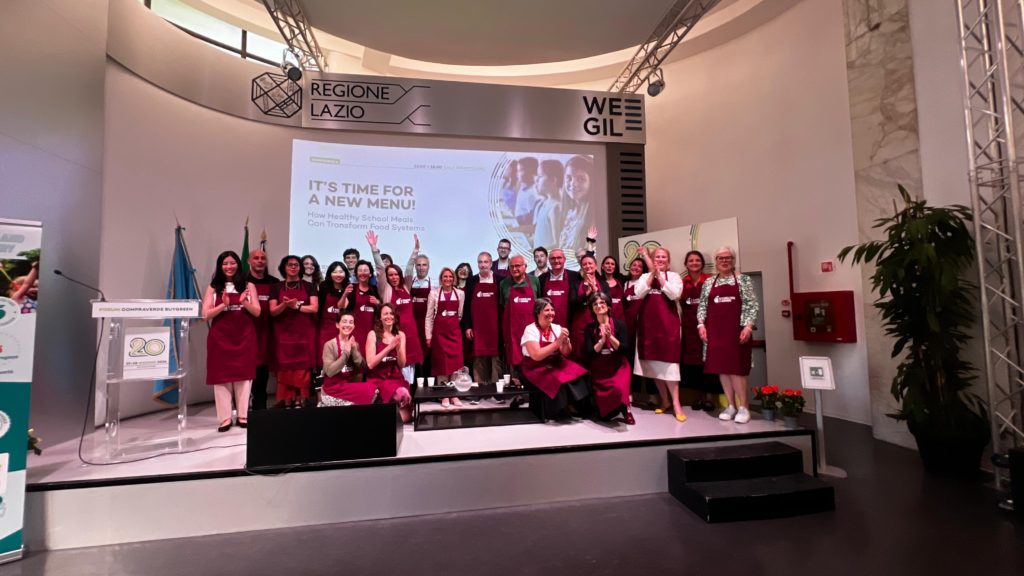
At the 2026 Forum Compraverde Buygreen Conference in Rome, SchoolFood4Change (SF4C) brought together policymakers, practitioners, researchers and city leaders from across Europe to share one powerful message: transforming school meals can transform entire food systems.
The SF4C Flagship Conference, titled “It’s time for a new menu! How healthy school meals can transform food systems”, marked a key milestone after more than four years of international, exciting and impactful collaboration – highlighting results, lessons learned and a vision for the future. The message that emerged consistently from all the speakers during the event was clear: school food is no longer just about what is served on a plate – it is about health, inclusion, sustainability, education and social change.
A proven approach to change
The SchoolFood4Change Triple Approach tackles the food system from multiple angles – linking what is served in canteens with education, supply chains, and policy frameworks.
The impact of this comprehensive and integrated model has become clearly visible within SchoolFood4Change – at school, local, political and pan-European levels. Across the SF4C network, every additional €1 invested in transforming school food generated at least €2.50 in social, environmental and health-related benefits. This evidence-based Return on Investment demonstrates that investing in better school meals clearly pays off.
SchoolFood4Change’s work also delivered measurable environmental results. With tools such as the GreenSpoon food emissions calculator, cities measurably achieved up to 33% reductions in greenhouse gas emissions, for example by introducing more plant-based meals.
From policy to the plate
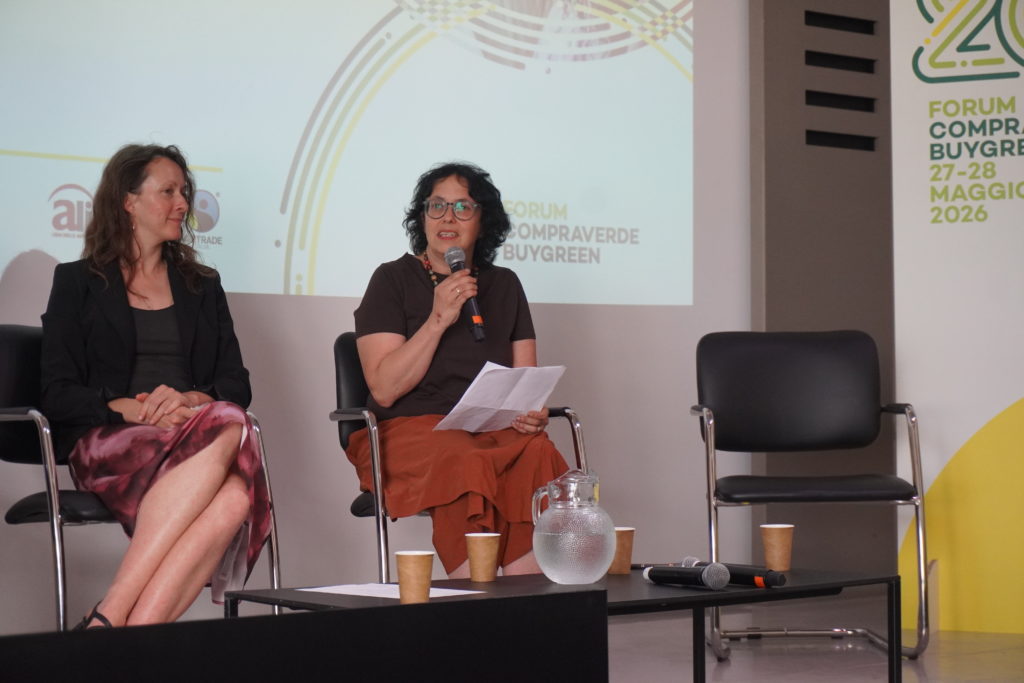
A key challenge discussed in Rome was turning sustainability and climate goals into meals that children actually enjoy.
“Children do not eat a guideline, they eat food.”
Nadia Tecco, University of Gastronomic Sciences, Pollenzo (Italy)
Nadia Tecco (UNISG) and Manuel Poschadel (Speiseräume/ Kantine Zukunft) point towards a critical point: success in implementing transformative measures depends not only on nutritional value of a meal, but also on its taste, food culture, traditions and experience. This puts kitchens and cooks at the centre of change. By focusing on recipes, taste and locally lived food culture, school meals can become both healthy and appealing – ensuring real impact and less food waste. Manuel Poschadel stated that:
“Healthy and sustainable is only when people actually eat. When nothing is left on the plate. So, we have to think about what will be eaten and what won’t actually be eaten.”
Learn more about how to change the menu and recipes in your canteen.
Access the SF4C School Menu Design handbook and our Recipe Hanbook here!
Schools as hubs for education and community change
The Whole School Food Approach (WSFA) has proven to be a powerful framework for embedding lasting change, connecting food with education, school culture, and community engagement.
Examples shared at the Conference ranged from student-run healthy food vending machines to school gardens, cooking classes and food education integrated into curricula.
In Antwerp, students themselves transformed snack offerings in schools – demonstrating ownership and creativity. The City of Milan used the WSFA to, beyond providing healthy food, strengthen food education pathways, encouraging children to explore ingredients and understand where food comes from.
“In Milan, we try to encourage children to discover the components of the meal, the ingredients and what is behind it. We feel that we have succeeded in doing this with the schools involved.“
Cristina Sossan, Area Food Policy, Education Department, City of Milan (Italy)
Importantly, this Approach goes beyond short-term projects. It aims to create lasting systems change. Within every of the four pillars, cities and schools can find many suggestions for how to implement the WSFA locally, adapted to local priorities and context, step by step. For example, some schools start by changing the school food policy, the food offer, sometimes it starts from parent involvement and then pupils’ involvement. Adaptable to a particular situation. Leena Tyrons at Rikolto stated that:
“The result of using the WSFA framework is to make sure that the effort is sustainable and long-lasting. Not to be just a project or nice initiative in the short term – it goes beyond that.”
However, challenges remain. Schools often face lack of time and resources, highlighting the need for support from municipalities and national policy frameworks.
Cities leading the way
The second part of the SchoolFood4Change Flagship Conference showcased political leadership from frontrunner cities implementing SchoolFood4Change.
From Dordogne’s ambition to reach 100% organic school meals, to Leuven’s work on improving accessibility for vulnerable children, the message was clear: change is possible in both large and small municipalities.
“A child cannot learn with an empty stomach. Food makes learning possible.”
Lalynn Wadera, Deputy Mayor, Leuven Municipality (Belgium)
Speaking on behalf of Viimsi (Estonia), Annika Vaikla, Deputy Mayor, emphasised that, in Viimsi (municipality + surrounding villages), working with SchoolFood4Change presented fewer challenges than benefits. She highlighted that smaller municipalities can be very strong, as they are flexible, close to local communities and residents, and can respond quickly to feedback, showing that scale is not a barrier to innovation.
Across all cities and their political representatives, a common theme emerged: school meals are not just a service, but a strategic investment in public health, education and local economies.
From local success to global movement
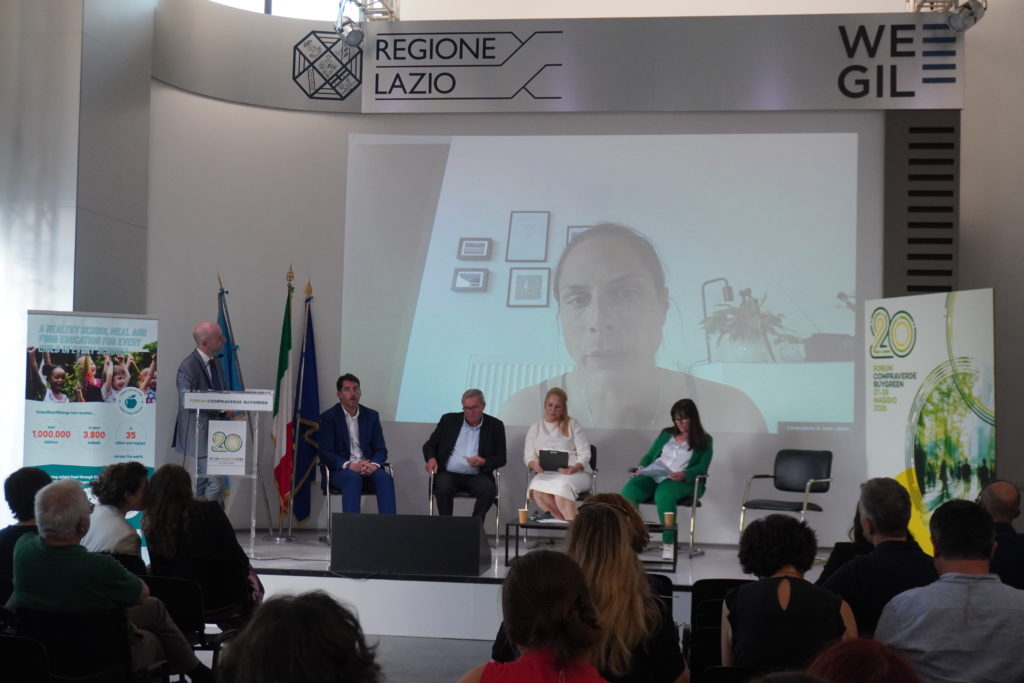
The final part of the Flagship Conference brought the discussion to a global level. Speakers from the European Commission, the European Parliament, the United Nations Food and Agriculture Organization (FAO) and other institutions emphasised that school food systems are gaining recognition worldwide as a key lever for change.
This systems perspective is critical. School meals influence not only children, but also families, markets and farmers – creating ripple effects throughout society.
At EU level, frameworks such as the European Child Guarantee and the EU School Scheme are opening new opportunities to scale impact. Yet challenges remain, particularly in ensuring equal access for all children and securing long-term funding.
“In the AGRI committee there is a broad consensus that every euro spent for children is an investment and that this investment also needs to go to farmers. I’d like to see the EU school scheme including plant-based proteins.”
Cristina Guarda, Member of the European Parliament (MEP), Group of the Greens/European Free Alliance
A shared vision: healthy meals for every child
It became clear not only at the Conference, but throughout SchoolFood4Change, that there is broad public support for better school meals. More than 111,000 Europeans have already signed a petition calling for every child to have access to healthy meals and food education.
“It’s a big sign of support that so many people signed your petition for better school meals. Who can actually disagree? Who can say no to a good meal?”
Corinna Hawkes, Director of the Agrifood Systems and Food Safety Division, FAO
Corinna Hawkes continued:
“It’s very important to build a coalition to push further for the matter. Because you already got the good cause and the support, so you need to continue to build the coalition to push and spread the important messages you have!”
The path forward requires collaboration across all levels – local, national and international. It also requires continued advocacy, investment and innovation.
But perhaps most importantly, it requires a shift in how we think about school food.
As Germinal Peiro, President of the Dordogne Departmental Council (France) concluded:
“We are deeply convinced that by changing food habits and changing the food served, we can change the world.”
Looking ahead
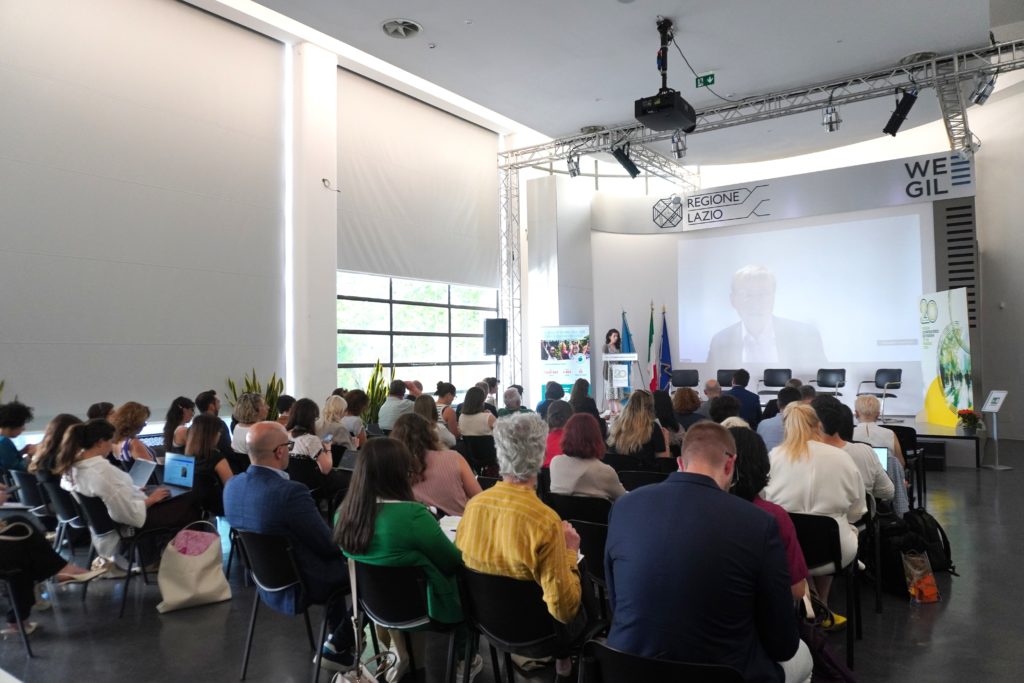
SchoolFood4Change has shown that transforming school meals is not only possible – it delivers tangible, evidence-based and measurable benefits for health, climate and society. It is now up to all of us to scale these successes and embed them into long-term policies and practices.
The tools, knowledge and partnerships developed through SchoolFood4Change provide a strong foundation. What comes next is ensuring that this momentum continues – so that every child, in every school, can enjoy healthy, sustainable and meaningful meals.
Because in the end, school food is not just about feeding children – it is about shaping the future.