(Read this article in Estonian here.)
While Estonia’s school food system faces many challenges, a number of the country’s schools have implemented practical solutions and exciting innovations in recent years that have made eating and learning about nutrition at school more exciting, healthier and more sustainable.
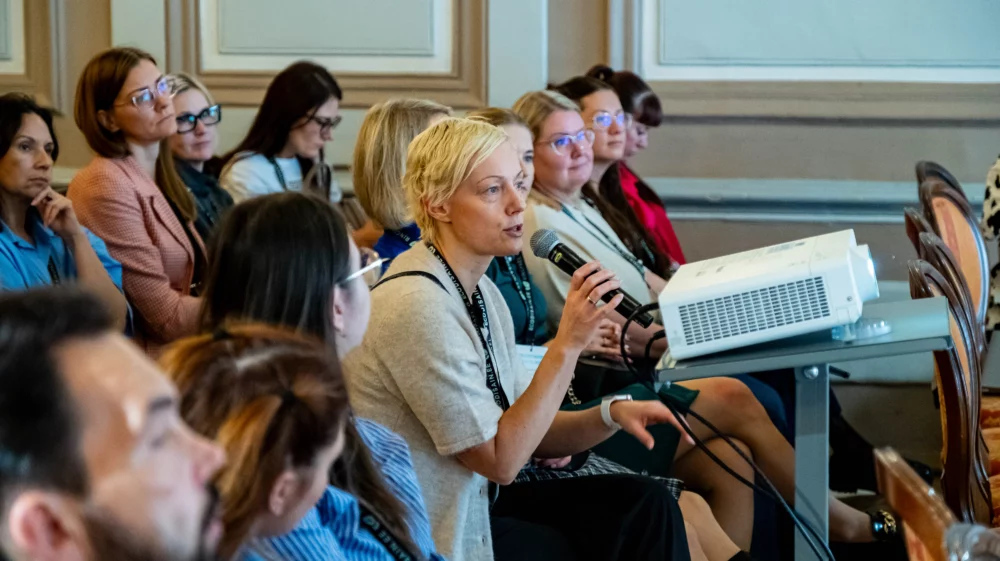
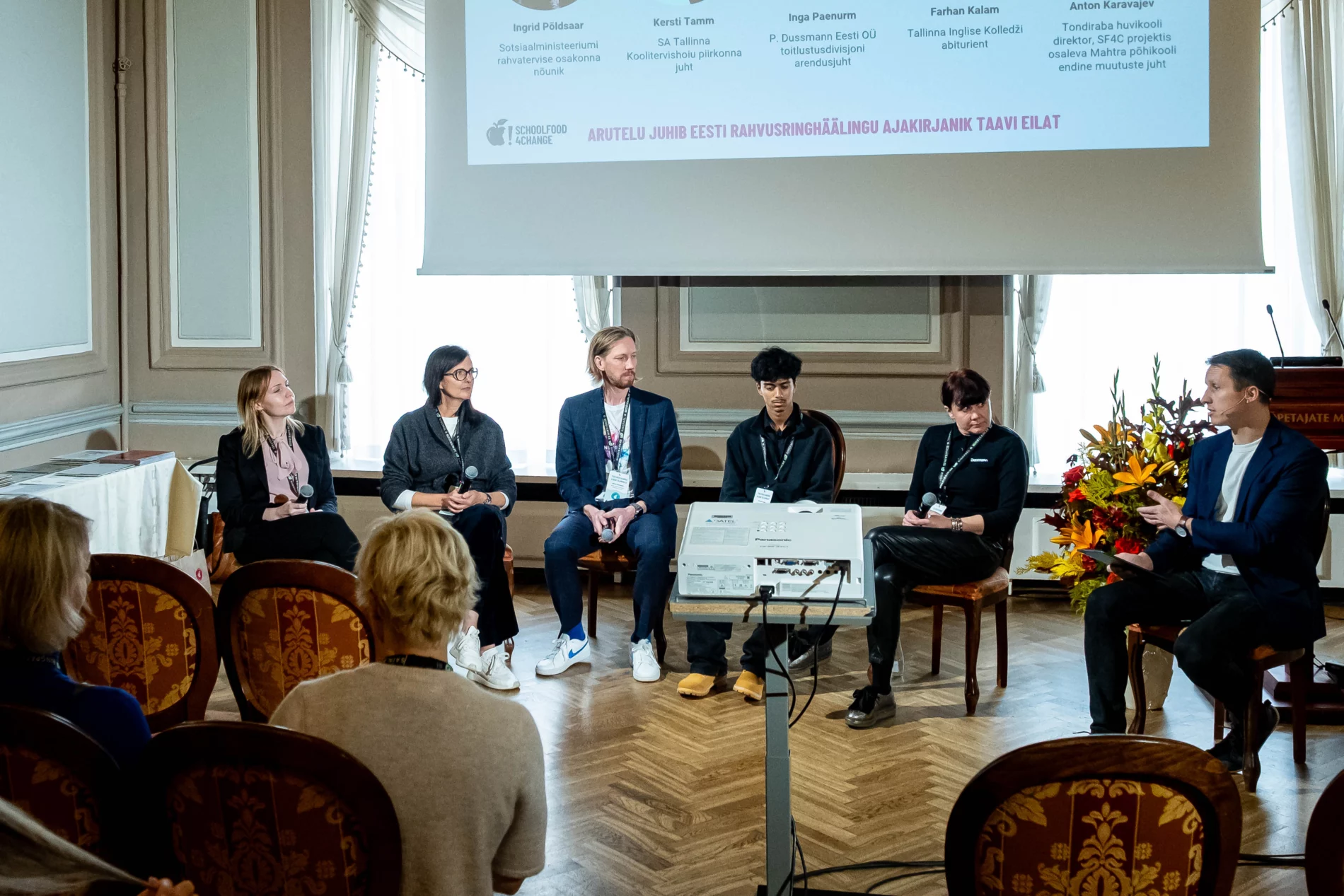
In October 2025, the Estonian SchoolFood4Change partners (the Stockholm Environment Institute Tallinn Center, the City of Tallinn, and Viimsi Rural Municipality) held a national conference involving 130 stakeholders from the Estonian school food system titled “The education of the future starts on the plate” to discuss challenges and successes in the field. The event, summarising four years of SchoolFood4Change activities in Tallinn and Viimsi (2022–2025), offered ample opportunities for reflection, knowledge sharing, and exchange.
From Canteen to Classroom: Schools Inspiring Healthier Choices
Several schools shared great examples of how they have succeeded in gaining students’ trust and interest in healthier eating habits:
- Introducing new foods: Tallinn Südalinna School held a plant-based protein week, during which students were introduced to plant-based protein sources in various subject lessons. “The canteen team served meals with lentils and beans for a whole week, and we showed the students in class all the components of that day’s lunch. This approach worked to grow students’ interest in new flavours, plant-based food and in trying these foods,” reported Delis Pärnoja, representing Tallinn Südalinna School.
- Community involvement: It’s not only about trying new foods, but also about involving the community, making the canteen a pleasant place to eat, raising awareness of foods’ origine and food waste. For example, students at Mahtra School in Tallinn renovated their canteen, Tallin English College has organised campaigns to donate to the food bank and reduce food waste, students at Prangli School grow their own herbs, Randvere School allows parents to taste school food and give feedback to the caterer, etc. Schools have organised food festivals, created working groups consisting of parents or students, and involved the community in many other activities.
- Training and innovation: Beyond this, two Estonian chefs participated in an international chef training course (organised by the University of Gastronomic Sciences) and then trained school caterers in Tallinn and Viimsi in preparing healthier and more sustainable school meals. Based on the knowledge gained from the training sessions, two novel recipes were developed, which were evaluated by school children in Tallinn and Viimsi using their four senses (smell, appearance, taste, texture).
Katrin Markii, Deputy Mayor of Viimsi, highlighted SchoolFood4Change’s impact in Estonia:
SchoolFood4Change has connected students, teachers, parents, educational institutions, the municipal government and caterers through lectures, training and practical activities. Together, we talk about healthy eating in a broader sense – because school lunch is part of learning and growing up. Healthy school food gives children energy and concentration for the entire day and forms healthy habits that last a lifetime.
Recognising Commitment: The Whole School Food Approach in Action
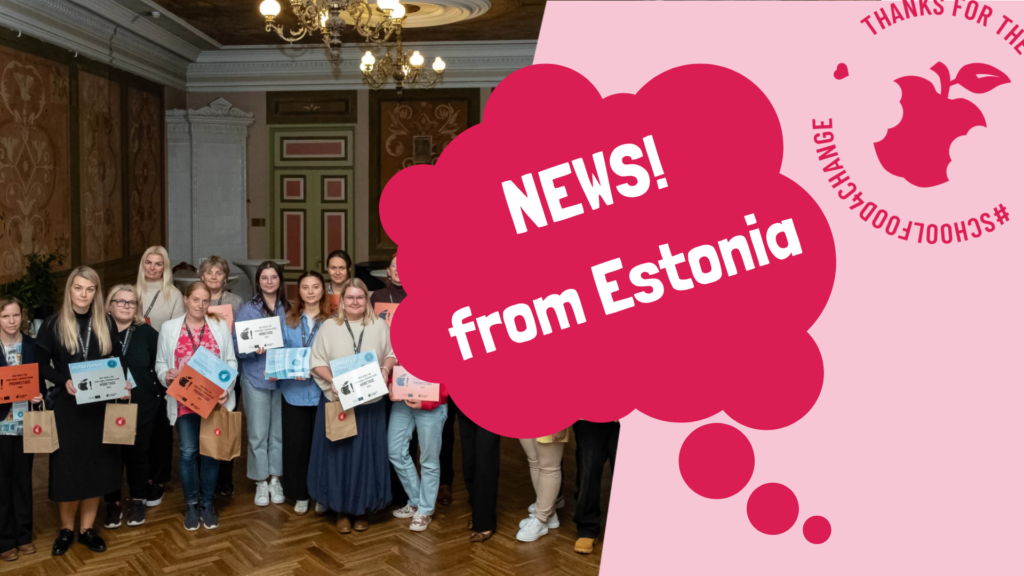
Ten schools in Tallinn, five schools in Viimsi and a kindergarten in Viimsi have been adopting the Whole School Food Approach. They took steps to include the topic of food and healthy eating in their curricula, organising joint cooking classes, excursions to farms, and school food festivals including the wider community. In recognition of their commitment, two schools received the WSFA Gold Certificate at the national conference in October 2025, four schools earned the Silver Certificate, and eight schools along with one kindergarten were awarded the Bronze Medal. (Learn more about the Whole School Food Approach levels and criteria for schools here.)
“We have seen very practical and effective changes in schools and at the city level as a result of our participation in SchoolFood4Change,” said SEI Tallinn Senior Expert Evelin Piirsalu. Beyond the classroom, at the city level, Tallinn and Viimsi reviewed school food procurement criteria (using the SF4C Procurement Handbook as a guide), requiring part of the ingredients to be organic, increasing vegetarian options, and integrating educational activities about food.
“At the conference, we saw how much joy and good energy working towards a common goal has brought to schools. Hopefully, these efforts will help today’s young people develop healthy eating habits in the future and they will be able to live healthier lives longer” said Evelin Piirsalu summarising the efforts taken in Estonia.
Drawing on insights from SchoolFood4Change and exchanges with stakeholders of the Estonian school food system, SEI Tallinn provides national and local governments with policy recommendations to ensure the highest-quality school meals that consider the needs of all stakeholders.
Read the policy recommendations here: https://www.sei.org/publications/kestlik-tervist-toetav-koolitoit/
Get insights into SchoolFood4Change’s activities in Estonia through this television report: https://jupiter.err.ee/1609797455/tahelepanu-tegemist-on-teadusega