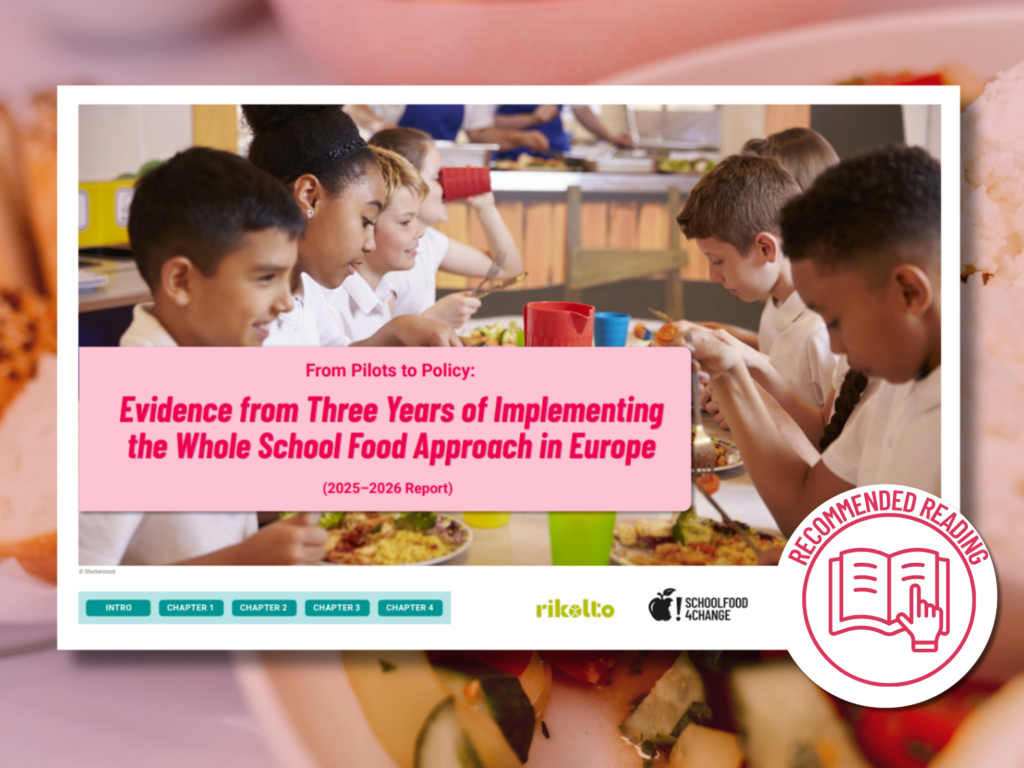
As Europe celebrates International School Meals Day 2026, Rikolto – member of the SchoolFood4Change network – is proud to launch its most comprehensive report to date: “From Pilots to Policy: Evidence from Three Years of Implementing the Whole School Food Approach in Europe”.
The release of this report marks a milestone for SchoolFood4Change. Written and published by Rikolto Europe, leading and coordinating the implementation of the Whole School Food Approach (WSFA) across countries, the report synthesizes three years of practical evidence and systemic advocacy. Rikolto has spearheaded the effort to gather data from the ground, ensuring that the lessons learned in school kitchens and city halls are translated into a clear roadmap for European policymakers.
Over the past three years, SchoolFood4Change (SF4C) has worked to fundamentally redefine the role of school food in transforming food systems toward greater sustainability and climate protection. Through the SchoolFood4Change Triple Approach and the Whole School Food Approach as a key lever, the team has set a benchmark for systemic change that places health, sustainability, and education into the heart of school food culture and the broader school community. Building on the gained experience and expertise, this new WSFA Report provides a robust evidence base for transforming food systems through school meals, featuring data and insights from over 850 schools across 12 European countries.
Evidence of a systemic shift
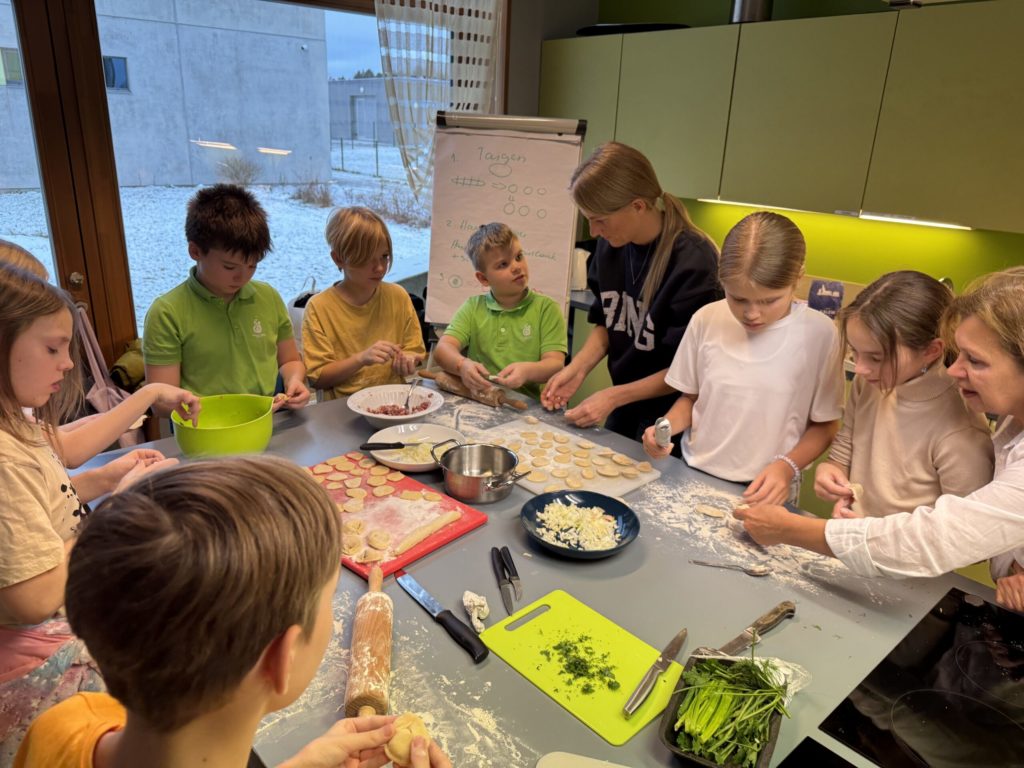
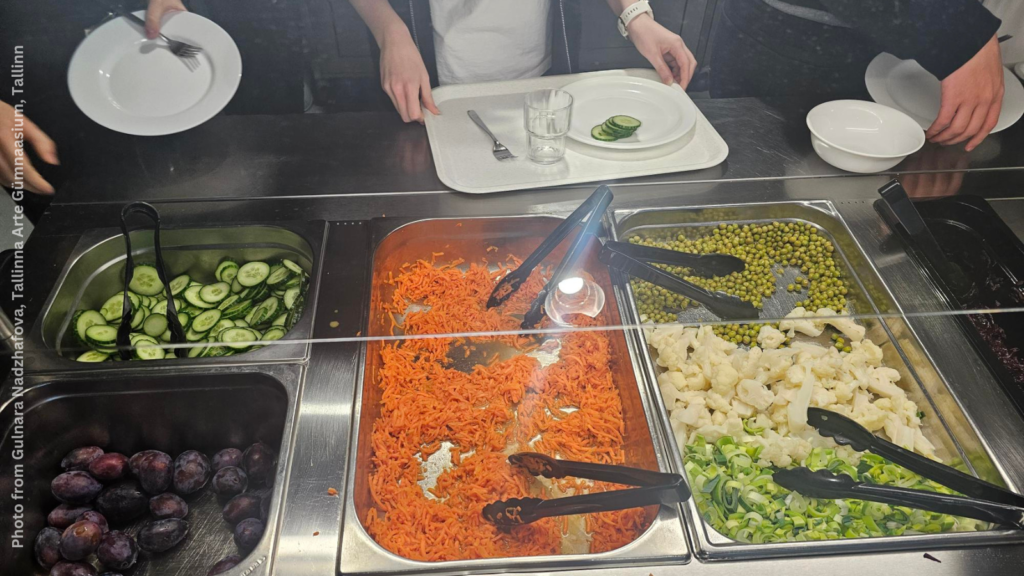
The report demonstrates that the WSFA is not just a theoretical model, but a method tested in practice that successfully bridges the gap between public health, environmental education, and sustainable procurement. By integrating these four pillars – sustainable procurement, healthy school food, food education, and school community and policy – schools are not just providing food; they are becoming hubs for food system innovation.
The findings show that when schools are supported by robust procurement policies and staff training, they become powerful engines for regional development. However, for this impact to last, it’s needed to move away from temporary initiatives. As the report highlights, we must escape the “project trap“.
Escaping the project trap
A central theme of the report, echoed in recent advocacy at the European level, is the necessity of structural stability. Thibault Geerardyn, Director at Rikolto Europe, points out the fragility of the current landscape: “The true obstacle to scaling up is institutional, not ideological. Changes in policy must be embedded in the current system, not merely added to it as a ‘nice to have’ project.”
Implementation within a predefined and limited time frame prevents the most innovative solutions from scaling up, leaving schools in a cycle of starting and stopping. The SF4C report argues that school food must be recognised as a permanent, strategic priority for the EU.
A shield against inequality and the climate crisis
The report reveals the staggering reality of the current health crisis: with one in four European adolescents facing overweight or obesity, and over 20% at risk of poverty, school meals remain the most powerful tool we have to ensure social equity1. Amalia Ochoa, Head of Sustainable Food Systems at ICLEI Europe and coordinator of SchoolFood4Change, notes that the success seen in 850 schools proves that local governments have the power to drive this change:
“Evidence proves the framework works, yet we are currently hitting a bureaucratic ceiling. Healthy school meals combined with food education represent the most accessible pathway to food system transformation, directly benefiting the 93 million children and young people going to school or university across Europe. By aligning existing initiatives under a coherent framework, the EU can deliver on its promises to public health and both economic and environmental sustainability in one integrated approach“
The economic case for permanent policy
Beyond health and sustainability, the report makes a compelling economic case. Evidence suggests that the transition from pilots to permanent policy is a matter of economic common sense, as every dollar invested in healthy school meals can yield a return of $3 to $9 in health and economic benefits2.
The findings from the 22 participating countries show that while local contexts differ, the need for multilevel support is universal. From training professionals to creating “School Food Councils,” SchoolFood4Change has created a blueprint that can be adapted across the continent.
Moving forward: a roadmap for Europe
Rikolto’s WSFA Report serves as a roadmap for European decision-makers to move from trials to systemic implementation. It is an invitation to treat school food not as a cost to be minimised, but as a strategic investment in the future of our children and our planet.
Download the full report “From Pilots to Policy: Evidence from Three Years of Implementing the Whole School Food Approach in Europe” here.
Download the report>>>
The full report, including the executive summary and detailed city profiles, is now available for download. It includes a deep dive into the Kobo-survey results, SWOT analyses per city, and specific policy recommendations for national and EU levels.