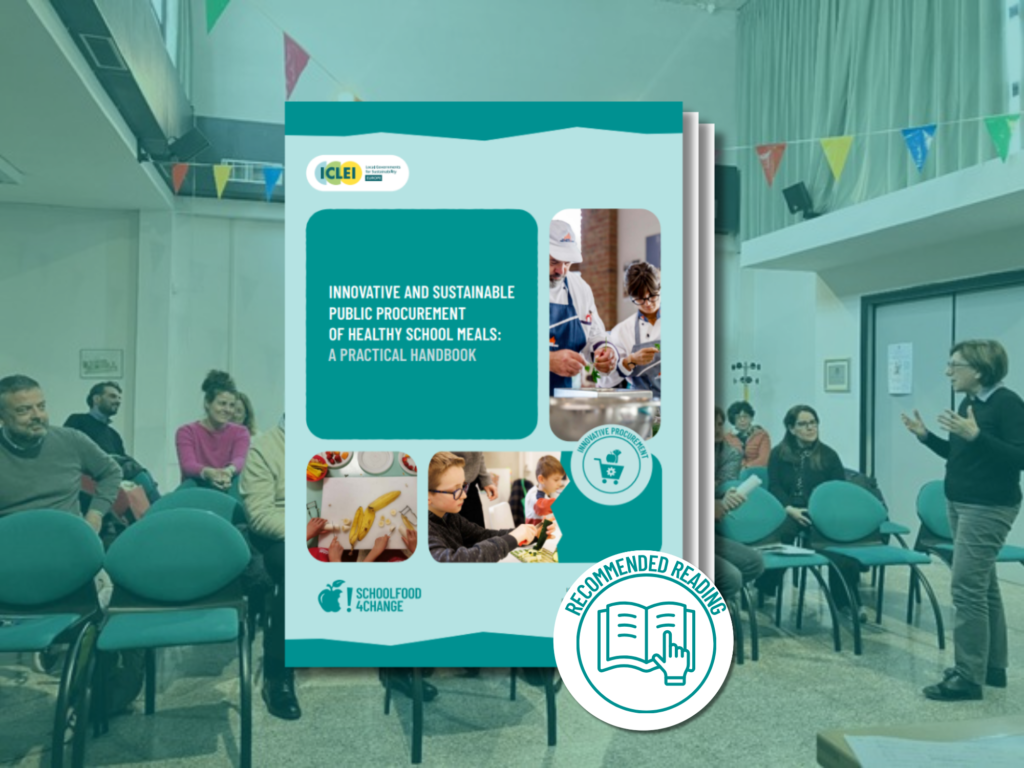
Innovation in procurement is key to making school meals healthier and more sustainable. But how can sustainability and health ambitions be translated into concrete tender requirements? The newly relaunched SchoolFood4Change Handbook for Public Procurement of School Meals offers practical guidance for procurers looking to drive change through public food contracts
Public procurement plays a crucial role in shaping food systems. Because large volumes of food are purchased to be processed in public canteens, procurement decisions on the local and regional level and strongly influence sustainability, health, and climate outcomes. In recent years, the European Commission has highlighted sustainable food procurement as a key lever for delivering healthier diets, climate action, and social equity.
The SchoolFood4Change Procurement Handbook supports public procurers and contracting authorities at local, regional, and national levels in integrating health, sustainability, and social justice objectives into school and public meal contracts – while remaining fully compliant with EU procurement law.
How can the Handbook be used? Let’s dive in!
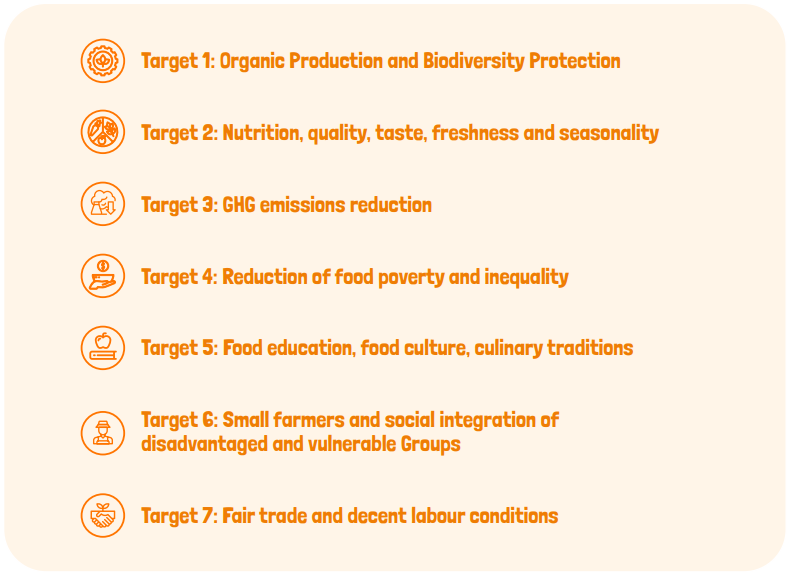
The Handbook is designed as a practical, easy-to-navigate reference tool for municipal employees procurers and procurement experts working on public tenders for the award of supplier contracts. Its structure is built around seven sustainability and health targets developed in light of best practice examples from European cities leading the field, such as Dordogne, Lyon, Ghent, Malmo, Copenhagen, and Milan. These targets address key facets of food systems, including organic food production, circular and fair economy, waste reduction, and better education and infrastructure for healthy and sustainable diets.
For each of these targets, the handbook presents concrete criteria, covering the full procurement cycle – from selection and technical specifications to award and contract performance clauses – that can be integrated into food and catering tenders to enable the uptake of innovative procurement practices on the markets.
The criteria were developed collaboratively with procurers, nutritionists, city representatives, schools, researchers and legal specialists. They align closely with existing European frameworks, including the EU Public Procurement Directive (2014/24/EU), the EU Green Public Procurement (GPP) criteria for food and catering, and the JRC Criteria for Sustainable Public Procurement (SPP) for Food, Food services, and Vending machines (2025).
Flexible solutions for local contexts
While the Handbook provides clear and precise guidance, it also recognises the diversity of local markets and administrative contexts. This means that the criteria allow scope for variation and contracting authorities can adapt the criteria to reflect the possibilities of the market, local needs, supplier capacities, and policy priorities.
Core or advanced sustainability ambitions?
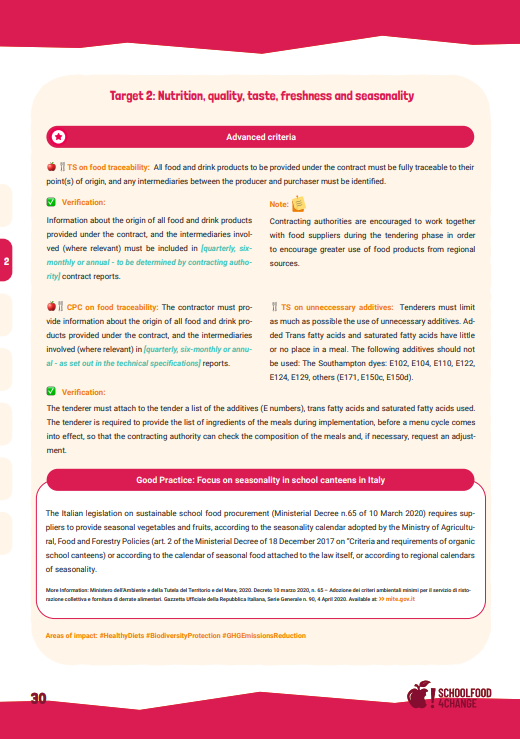
To support municipalities and procurers at different stages of experience, the Handbook introduces two levels of ambition. Authorities can begin with core level criteria that ensure minimum sustainability and health outcomes, or adopt advanced criteria, going beyond a basic health and sustainability standard, encouraging tenderers to deliver higher-impact services and products aligned with planetary health diet principles.
Inspiration beyond technical guidance
Alongside technical, and legally approved recommendations for public food tenders, the Handbook also showcases innovative procurement approaches tested in different European contexts. These procedures, increase supplier participation, improve supply chain transparency and foster collaboration towards more sustainable food systems.
Read the procurement handbook here: https://schoolfood4change.eu/wp-content/uploads/2026/02/SF4C_ICLEI_SF4C-Procurement-Handbook_final.pdf